Sample Content
Minimally Invasive Hip Replacement – direct superior approach
We understand that making sure you know what to expect from the hip replacement experience is important to you. If you have additional questions as you are reading through this material, please reach out to us to discuss.
Diagnosis and Treatment of Hip Pain
Total Hip Replacement
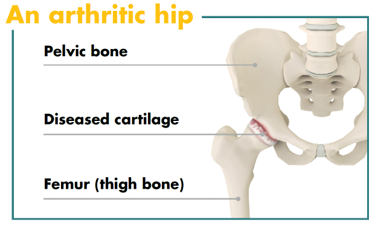
Total hip replacement involves removing arthritic bone and damaged cartilage in the hip joint and replacing them with an implant. The hip joint is generally described as a ball-and-socket joint. Take a look at how the end of the thigh bone (femoral head) is replaced with a femoral stem and an artificial ball that is secured to the top of the stem. The hip socket (acetabulum) is reconstructed, typically using a metal cup lined with plastic (polyethylene). The femoral and acetabular components work together to form the artificial hip implant.
What is a muscle-sparing hip replacement?
Muscle and tissue surround and support the hip joint. During hip replacement, your surgeon must get past that muscle and soft tissue to access the bones of the joint – either from the side, the back, or the front of your body. There are hip replacement techniques that may allow for smaller incisions, designed to minimize the impact on those tissues and muscles.1,2
Direct Superior Approach
Your surgery may be performed using the direct superior approach, a minimally invasive, muscle-sparing surgical technique used in total hip replacement. Unlike traditional surgical approaches that use larger incisions, minimally invasive techniques like the direct superior approach use smaller incisions. The direct superior approach allows a surgeon the potential to avoid cutting or disturbing key hip muscle groups, including the hip flexors, external rotator muscles, abductors, and the iliotibial (IT) band.1
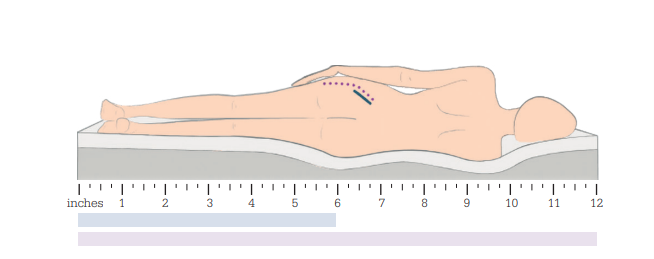
A Direct Superior approach surgery is performed with the patient lying on his or her side, with an incision on the back of the hip joint.2 This muscle-sparing approach was developed to be performed through a smaller incision compared to a traditional posterior approach.3
What are the differences between the direct superior approach and a traditional hip replacement?
One difference is the location of the incision. During a traditional hip replacement, the surgeon will make an incision through the IT band, which is a muscle that extends down the outside of your leg from the pelvis to the knee. In a direct superior procedure, the surgeon avoids cutting the IT band.1
Another difference is the length of the incision. Traditional hip replacement may require a 10-12 inch incision while the incision used in the direct superior approach may be 3-6 inches in length.1
IMPORTANT INFORMATION
Hip replacementsHip joint replacement is intended for use in individuals with joint disease resulting from degenerative and rheumatoid arthritis, avascular necrosis, fracture of the neck of the femur or functional deformity of the hip.
Joint replacement surgery is not appropriate for patients with certain types of infections, any mental or neuromuscular disorder which would create an unacceptable risk of prosthesis instability, prosthesis fixation failure or complications in postoperative care, compromised bone stock, skeletal immaturity, severe instability of the joint or known or suspected sensitivity and /or allergy to any material in the device.
Like any surgery, joint replacement surgery has serious risks which include, but are not limited to, pain, infection, bone fracture, change in the treated leg length (hip), joint stiffness, hip joint fusion, amputation, peripheral neuropathies (nerve damage), circulatory compromise (including deep vein thrombosis (blood clots in the legs)), genitourinary disorders (including kidney failure), gastrointestinal disorders including paralytic ileus (loss of intestinal digestive movement), vascular disorders (including thrombus (blood clots), blood loss, or changes in blood pressure or heart rhythm), bronchopulmonary disorders (including emboli, stroke or pneumonia), heart attack and death.
Implant related risks which may lead to a revision of the implant include dislocation, loosening, fracture, nerve damage, heterotopic bone formation (abnormal bone growth in tissue), wear of the implant, metal and/or foreign body sensitivity, soft tissue imbalance, osteolysis (localized progressive bone loss), audible sounds during motion and reaction to particle debris. Hip implants may not provide the same feel or performance characteristics experienced with a normal healthy joint.
The information presented is for educational purposes only. Speak to your doctor to decide if joint replacement surgery is appropriate for you. Individual results vary and not all patients will return to the same activity level. The lifetime of any joint replacement is limited and depends on several factors like patient weight and activity level. Your doctor will counsel you about strategies to potentially prolong the lifetime of the device, including avoiding high-impact activities, such as running, as well as maintaining a healthy weight. It is important to closely follow your doctor’s instructions regarding post-surgery activity, treatment and follow-up care. Ask your doctor if joint replacement is right for you.
Stryker Corporation or its other divisions or other corporate affiliated entities own, use or have applied for the following trademarks or service marks: Stryker. All other trademarks are trademarks of their respected owners or holders.
References
1. Minimally invasive total hip replacement, AAOS Orthoinfo, https://orthoinfo.aaos.org/en/treatment/minimally-invasive-total-hip-replacement/, Accessed Feb. 13, 2026.
2. Barrett AA, Ezzibdeh RM, Horst PK, Roger DJ, Amanatullah DF. Direct Superior Approach to the Hip for Total Hip Arthroplasty. JBJS Essent Surg Tech. 2019 May 8;9(2):e17. doi: 10.2106/JBJS. ST.18.00078. PMID: 31579535; PMCID: PMC6687490.
3. Roger, D. J., & Hill, D. (2012). Minimally Invasive Total Hip Arthroplasty Using a Transpiriformis Approach: A Preliminary Report. Clinical Orthopaedics and Related Research, 470(1).
JR-GSNPS-OTHW-3092650
Copyright © 2026 Stryker Corporation